
Açaí in the food service market – how to succeed commercially in Norway
Açaí has evolved from being a niche product to becoming an established part of modern dining concepts. For many cafés and health-oriented concepts, açaí represents an opportunity to reach a quality-conscious audience with a high willingness to pay. At the same time, there is a big difference between having açaí on the menu and achieving commercial success with the category. Those who succeed work consciously with raw material quality, operations, and concept so that the product delivers consistently throughout the year.
Why açaí has become a profitable category for cafés and restaurants
In recent years, the Norwegian market has moved towards products that combine perceived quality, flexible use, and a clear identity. Açaí fits well into this development because it can be marketed as a fruit-based product, a modern dessert alternative, and part of a holistic concept. When presented correctly, it is perceived as premium, even though production can be standardized and streamlined.
Açaí is also visually appealing. Products that look good and are easy to understand often achieve greater reach on social media. This has a direct impact on demand, particularly for cafés and places with a high proportion of new customers. At the same time, açaí has a practical advantage: it can be served as a quick bowl, as a smoothie base, or in dessert form, allowing the same ingredient to be sold in several varieties. For establishments that want to offer stable and well-developed açaí products for professional serving, the choice of ingredients and supplier is crucial.

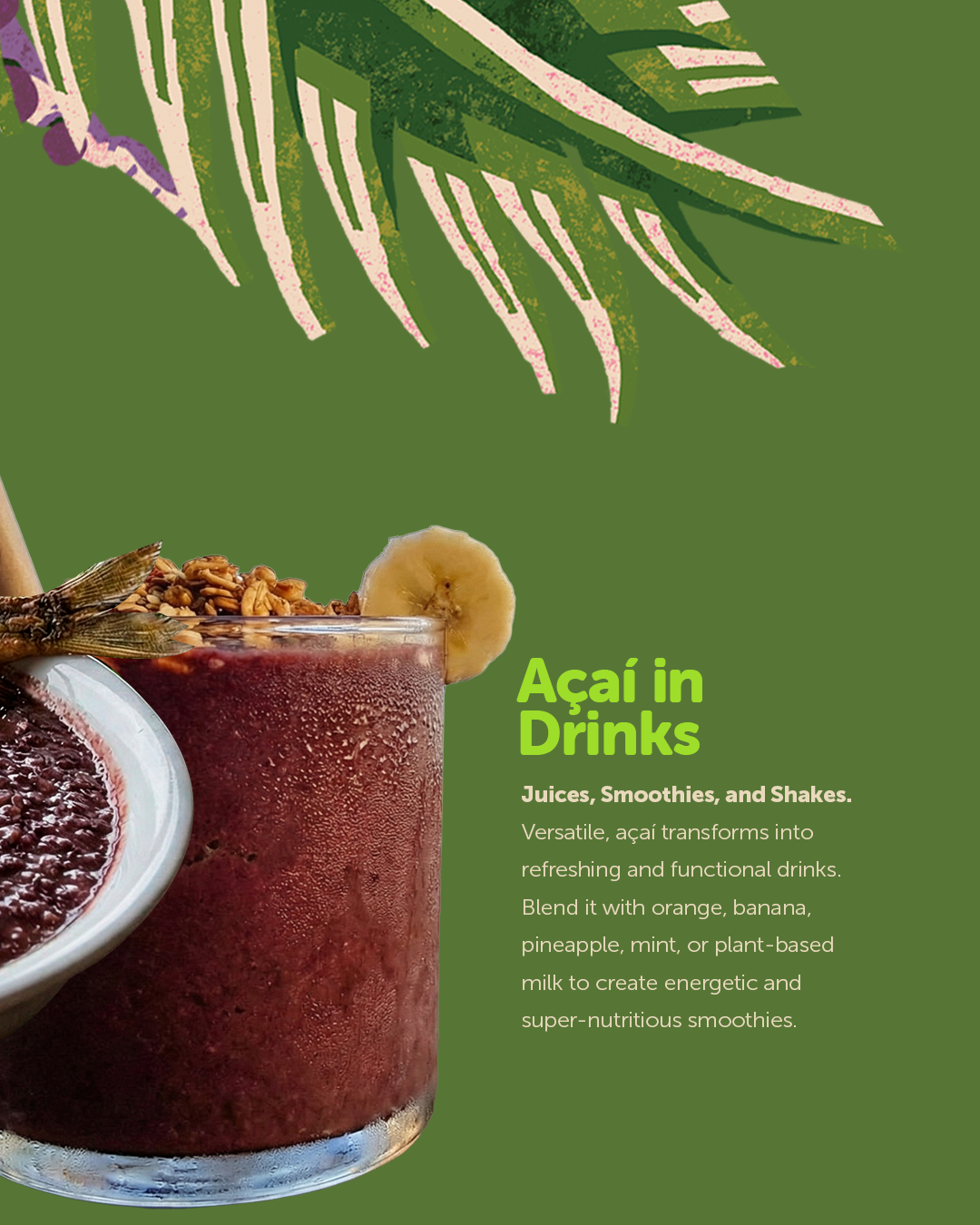
Raw material quality and consistency: what determines whether the customer will return
In practice, it is the quality of the raw ingredients that distinguishes a product that is merely trendy from a product that generates stable repeat sales. The taste, consistency, and mouthfeel must be consistent from one serving to the next. In the food service market, this means that the product must be able to withstand variations in temperature and pace, while still delivering consistent results.
Differences in fruit content, sweetness, texture, and stability quickly become apparent when the product is used daily. For staff, it's about how easy the product is to work with, how quickly it can be portioned, and how well it works with toppings and other components. For the customer, it's about the experience. Açaí that tastes watery, too sweet, or collapses will quickly lead to a poorer reputation and lower willingness to pay.
For a food service business, the consequences of inconsistent quality are often more than just dissatisfied customers. It also creates more waste, more time spent on adjustments, and more uncertainty in operations. Consistent quality is therefore a prerequisite for açaí to become a profitable category over time.
How açaí can increase sales through better menu structure and higher average purchases
To be commercially successful, açaí must have a clear place on the menu. Many restaurants make the mistake of treating the product as an add-on, without a clear role. Açaí works best when it is placed in its own category, or as a central part of a concept where customers expect fresh, modern alternatives.
An effective approach is to define a few signature variants with recognizable combinations, while offering the possibility of customization. This makes the menu easy to understand, production efficient, and quality consistent. Açaí is also well suited for upselling because it can be naturally combined with coffee, juice, baked goods, or other dessert concepts such as Italian gelato and sorbetto, depending on the target audience and time of day.
There is also year-round potential in açaí that is often underestimated. Although the product is associated with summer, it works just as well in winter when framed as an energizing breakfast option or a light dessert. When açaí is made a regular part of the menu with clear communication, it becomes easier to build routines, estimate volume, and create predictability in sales.
FAQ – Açaí in the food service market
What should you consider before offering açaí in your café or restaurant?
Raw material quality, consistency, storage, and delivery reliability are crucial. For professional use, you should choose a supplier who understands the catering market and can contribute to stable operations.
How to choose the right açaí supplier in Norway?
Look for consistent quality, the right fruit content, and documented delivery reliability. A good supplier should also be able to advise on implementation and menu use in professional catering.
Is açaí profitable in the food service market?
Yes, when used correctly in the menu and presented clearly, açaí can provide high perceived value and contribute significantly to average purchase value. Profitability depends on the choice of ingredients and efficient operations.
Can açaí be sold all year round in Norway?
Açaí is a year-round product. Although demand increases in the summer, it is also used as a breakfast and dessert option throughout the rest of the year.